
A Quiet Enclave within Tampa Palms
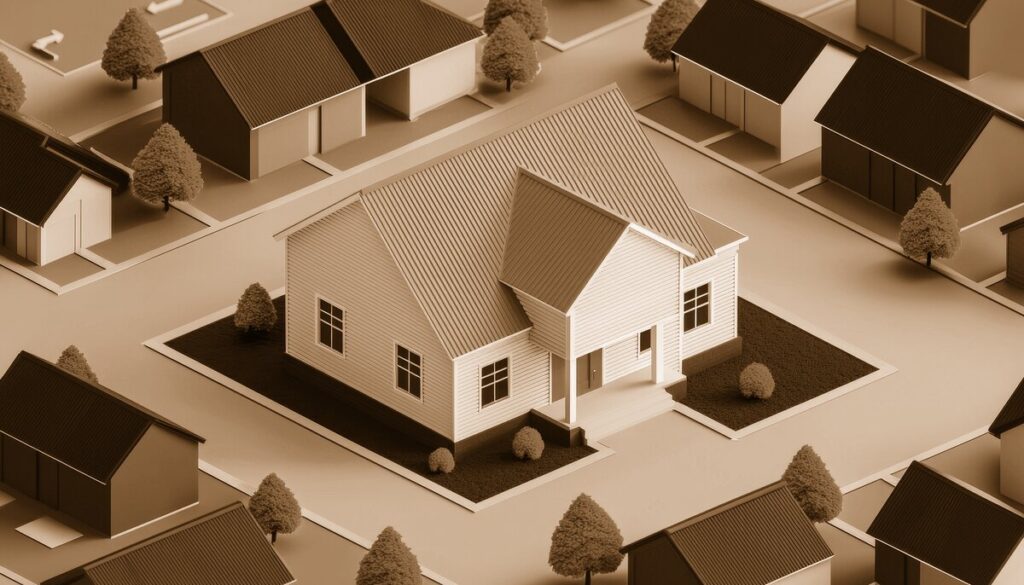
Kensington at Tampa Palms is easy to miss if you are simply driving through New Tampa. Tucked behind its gated entrance and set within the larger Tampa Palms master-planned community, Kensington is a small residential enclave with an identity all its own. With only 47 homes, it has the intimate feel of a traditional neighborhood while benefiting from the parks, schools, roads, and natural spaces that helped make Tampa Palms one of northeastern Hillsborough County’s most recognizable communities.
For longtime residents, Kensington’s appeal is not based on a single historic building or a famous event. Its heritage is found in the way the neighborhood was planned: compact, landscaped, private, and connected to a much larger vision for life along the Hillsborough River and the Bruce B. Downs corridor.
Before Kensington: The Tampa Palms Landscape
Before the arrival of Tampa Palms, this part of northeastern Tampa was largely a landscape of pine woods, palmettos, wetlands, scattered farms, and undeveloped acreage. The area was far removed from the older urban neighborhoods near downtown, Ybor City, and South Tampa. Its identity was shaped more by native Florida vegetation and the Hillsborough River than by city streets or commercial buildings.
That natural setting became central to the development philosophy of Tampa Palms. The community was designed as a mixed-use, master-planned neighborhood on approximately 4,100 acres, with homes, offices, schools, shops, churches, recreation facilities, and protected-looking green spaces woven together rather than separated into isolated subdivisions. Early descriptions of Tampa Palms emphasized the idea of a “small town by the river,” a phrase that still captures the community’s character.
The name *Tampa Palms* reflects that setting. It combines the city’s name with the palms and subtropical landscape that were visible across the property before development. Rather than erasing the land’s Florida character, planners used palms, oak trees, lakes, and greenbelts as part of the community’s visual identity.
The Origins of Kensington
Kensington emerged during the early growth of Tampa Palms, when the larger community was being divided into individual villages and residential enclaves. Unlike a broad suburban tract with identical streets and large numbers of homes, Kensington was conceived as a more exclusive, gated neighborhood with a smaller footprint.
The name “Kensington” appears to have been chosen as a graceful, established-sounding residential name, consistent with the naming style used for several Tampa Palms villages. There is no widely published record identifying one specific person, estate, or historic property as the source of the name. In that sense, Kensington’s name belongs to the era of planned-community development: it suggests permanence, privacy, and traditional neighborhood character while fitting neatly into the Tampa Palms family of communities.
The Kensington at Tampa Palms Homeowners Association was established on February 24, 1994. That date provides an important milestone in the neighborhood’s history, marking the formal creation of the community association that would help maintain its private streetscape, architectural standards, landscaping, and shared identity.
Streetscape and Architectural Character
One of Kensington’s most distinctive features is its sense of enclosure. The community’s gated entrance creates a transition from the broader roads of Tampa Palms into a smaller residential world. Inside, the streets are quieter and more intimate, with homes arranged around landscaped drives and carefully maintained common areas.
Kensington’s design reflects a period when Tampa-area developers increasingly looked beyond the conventional subdivision model. Instead of treating every lot as an independent property, the neighborhood was planned as a unified setting. Entry landscaping, sidewalks, lawns, mature trees, and coordinated architectural details all contribute to that impression.
The larger Tampa Palms street network reinforces this design. Tampa Palms Boulevard serves as a major spine through the community, connecting residential villages with commercial areas, schools, and recreation facilities. Nearby roads such as Palm Springs Boulevard, Compton Drive, and Amberly Drive help link residents to the amenities that define the wider neighborhood. Tampa Palms Boulevard was notably designed as a broad central roadway, reflecting the master plan’s effort to accommodate growth while preserving a spacious appearance.
Parks, the River, and Nearby Landmarks
Although Kensington itself is residential, its heritage cannot be separated from Tampa Palms’ extensive park and recreation system. The community is known for multiple parks, including spaces near the Hillsborough River, where residents can find trails, picnic areas, docks, and canoe launches.
Compton Park Recreation Center, located on Compton Drive, has become one of the area’s best-known gathering places. Its playgrounds, sports areas, meeting spaces, and open lawns provide the kind of shared civic setting that many neighborhoods lack. Amberly Park and River Park also help preserve the feeling that Tampa Palms was built around nature rather than simply placed on top of it.
The Tampa Palms Golf & Country Club is another important landmark in the community’s story. Its fairways and clubhouse helped establish the area as a destination for recreation and social life during the late 1980s and 1990s. Together with the lakes, wooded corridors, and landscaped boulevards, the club reflects the community’s original promise of a suburban lifestyle surrounded by Florida scenery.
Schools have also shaped the neighborhood’s history. Tampa Palms Elementary, Chiles Elementary, and Liberty Middle School became important anchors as families moved into the area. Their presence helped transform Tampa Palms from a new development into a settled community with its own routines, traditions, and generations of residents.
How Kensington Has Evolved
Kensington has changed gradually rather than dramatically. The surrounding Tampa Palms community grew from a new master-planned development into an established part of New Tampa, and Kensington matured along with it. Young landscaping became taller and fuller. Early homeowners became longtime residents. New families arrived, while older families moved within the broader Tampa area or passed their homes to the next generation.
The surrounding landscape also evolved. Bruce B. Downs Boulevard developed into a major commercial and transportation corridor, bringing shopping, restaurants, medical offices, churches, and services closer to home. What once felt like a distant suburban outpost became part of a busy, connected section of Tampa.
Even with that growth, Kensington has retained the qualities that defined it from the beginning: a small number of homes, a private setting, and a close relationship with Tampa Palms’ parks and natural spaces. Its heritage is less about nostalgia for a vanished past and more about continuity—the neighborhood has kept its original scale and character while the city around it has expanded.
What Makes Kensington Special Today
For a longtime resident, Kensington’s greatest historical value is its sense of proportion. It is large enough to benefit from Tampa Palms’ amenities but small enough for neighbors to recognize one another. Its gates create privacy, while the nearby parks, schools, and commercial areas keep residents connected to the wider community.
The neighborhood also represents an important chapter in Tampa’s suburban history. Kensington was built during the period when northeastern Tampa was shifting from rural acreage to thoughtfully planned residential communities. Its streets and homes tell the story of that transition, but so do the trees, lakes, greenbelts, and public gathering places that remain woven into the landscape.
Today, Kensington at Tampa Palms feels established without feeling old-fashioned. It carries the polished character of a planned community, the quiet familiarity of a small neighborhood, and the unmistakable landscape of Florida. That combination is what gives Kensington its lasting appeal—and what makes its heritage worth remembering.